

Venetian Plaster Kitchen: A Practical Guide from Vasari Lime Plaster & Paint

If you are planning a kitchen renovation and considering something beyond paint or wallpaper, Venetian plaster deserves a serious look. This guide covers where it works, where it does not, and how to get a finish that holds up to real cooking.
Venetian Plaster in the Kitchen: Is It a Good Idea?
The short answer is yes. Venetian plaster walls are suitable for most kitchen surfaces when correctly specified, applied, and sealed. The material handles daily life in a cooking space better than many people expect, especially when you use authentic lime plaster rather than synthetic alternatives.
Vasari Venetian plaster is made from slaked lime and marble dust. It is a mineral finish, not a plastic film. Because it is "vapor-open" it lets moisture pass through the wall rather than trapping it behind a sealed skin. That breathability makes lime plaster resistant to bacteria and mold, a real advantage in high humidity areas where steam from cooking and dishwashing is constant. Lime based plasters have zero VOC emissions, which means improved indoor air quality for the room where your family spends a good portion of the day. These eco-friendly plasters are suitable for high traffic areas like open plan kitchens.
Throughout this article, "Venetian plaster" refers to traditional lime and marble finishes, not acrylic (synthetic) Venetian plasters. The lime version carbonates over time which means it grows harder and more durable. Synthetic films typically soften and start to peel under repeated heat and steam cycles. Our recommended product for kitchen walls and ceilings is Vasari Veneziano, a polished Venetian plaster that is aesthetically pleasing, easy to wipe down, and available in a wide color range. For backsplashes and high-splash zones behind sinks and cooktops, Tadelakt or fully sealed Venetian plaster is the preferred product. Contact Vasari for specific project guidance.
What Is Venetian Plaster, Marble Dust & How Does It Behave in a Kitchen?
Venetian plaster is made from natural limestone and marble dust, combined with mineral pigments and applied in multiple thin layers. Each coat is compressed with a trowel and burnished to build depth, sheen, and a surface that mimics the look and feel of natural stone.
The chemistry is what makes this finish different from paint. Lime plaster cures through carbonation: the calcium hydroxide absorbs CO₂ from the air and converts back into calcium carbonate, essentially re-forming into limestone or marble over months and years. High quality plaster can be harder and more resistant to everyday scuffs than ordinary painted walls, and it develops character over time instead of wearing like painted finishes. That said, Venetian plaster is not fully waterproof and requires care and maintenance for durability.
Where acrylic Venetian plasters form a polymer film on the surface, lime finishes are porous to vapors and non-plastic. Under the heat and steam of a working kitchen, synthetic films can blister, crack, or peel. A lime based surface simply breathes. Vasari Veneziano sits at the polished end of the spectrum, from a soft semi-gloss to a high, marble-like shine. Polished Venetian plaster creates a marble-like shine that reflects under-cabinet lighting and adds visual warmth without the coldness of actual stone slabs.

Design Ideas: Aesthetically Pleasing Venetian Plaster Kitchen Styles & Color Schemes
Venetian plaster is a versatile, timeless finish that can support many design styles, from old world Mediterranean to stripped-back contemporary or modern. The color palette and sheen level you choose will shape the final feel more than almost any other decision. Venetian plaster can be customized in unlimited colors. Custom colors include tones like orange, green, and blue, so you are not limited to neutrals. Frequently we will receive swatches of fabric or other items for custom color matching.
Warm, earthy Marmorino-style textures in clay beige or soft terracotta pair well with oak cabinets and natural stone counters, and they also sit well alongside wood cabinetry. Marmorino plaster offers multiple textures and finishes within the same product and can deliver a matte, natural stone finish. Giving a more rustic feel, these lower sheen finishes absorb light and read quieter, creating warmth rather than glare.
Cool, light gray polished walls with a soft sheen work well around a white-and-black kitchen palette. The reflective surface amplifies task lighting and makes the space feel larger. This approach works especially well in modern interiors where clean lines and minimal texture are the goal.
Deep, desaturated greens or charcoal Venetian plaster accent walls behind open shelving or a range hood add depth and drama. The trowel movement in the plaster softens color gradations, so a dark wall never reads as flat or heavy. Creating an accent wall in a breakfast nook or around a built-in hood gives the room a focal point without overwhelming the kitchen. Higher polish finishes reflect pendant and under-cabinet lighting for a more visually active wall; softer, satin textures read cozy, lovelier in a more rustic space.
Venetian plaster walls soften light and reduce the flatness of painted drywall, which is why designers keep returning to this finish. Venetian plaster can mimic natural stone in appearance while remaining lighter and less expensive than cladding an entire wall in marble or brick. Vasari can color-match popular cabinet and countertop tones, helping designers coordinate wall colors with fixed elements like the warm white quartz and natural oak cabinetry common in 2023 to 2026 projects.
Where to Use Venetian Plaster in a Kitchen (And Where to Upgrade to Tadelakt)
Venetian plaster works well for accent walls, range hoods, and dining area walls connected to the kitchen. Here are the surfaces where it performs best:
-
Main walls and soffits away from direct water or grease contact.
-
Range hood surrounds, at an appropriate distance from intense direct heat.
-
Peninsulas or low walls facing dining or living areas.
-
Ceilings in open-plan kitchens and living rooms.
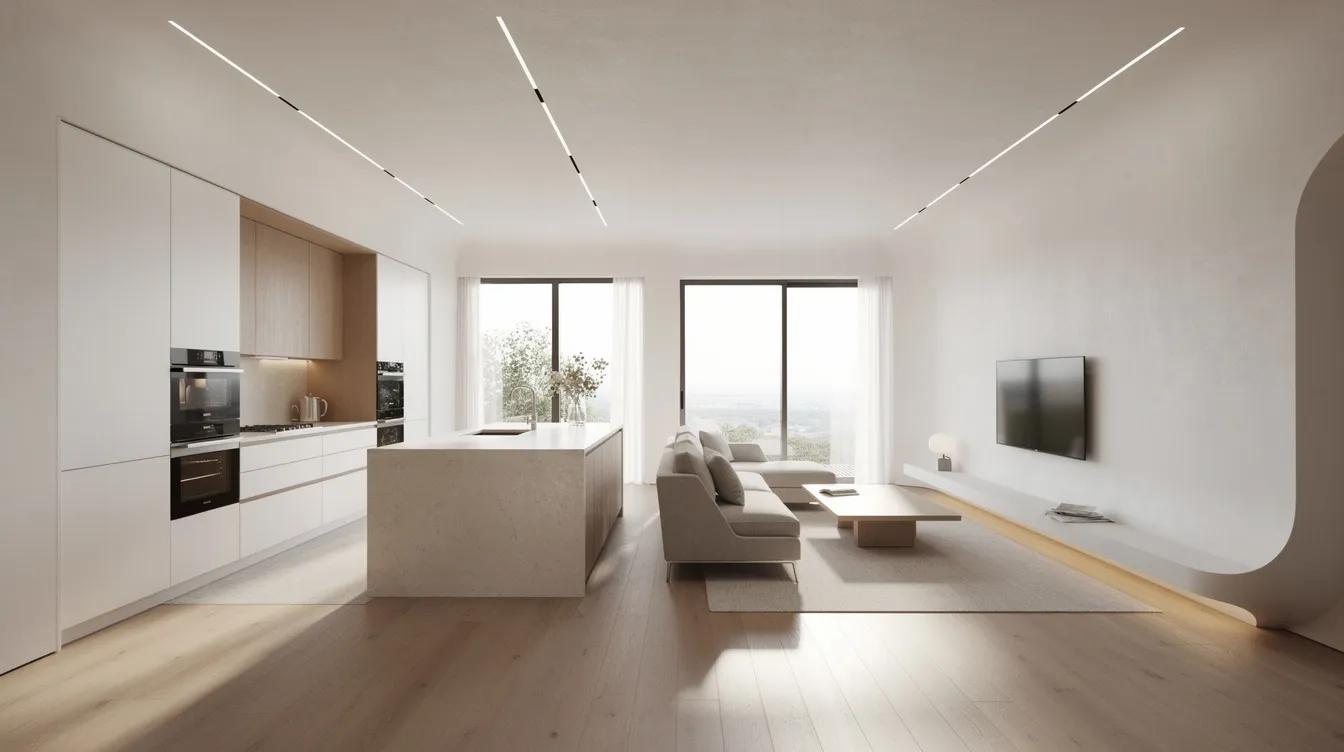
One of the strengths of Venetian plaster in a kitchen is its ability to visually connect the cooking space to adjoining rooms. A continuous plaster surface across a long wall, from kitchen through dining area, creates a seamless surface without grout lines or wallpaper seams. That visual continuity adds elegance and makes the overall space feel larger.
Direct application of Venetian plaster behind sinks or cooktops is generally not recommended. These zones get heavy splashes, grease, and standing moisture. Unsealed Venetian plaster can absorb water and grease, leading to stains. For backsplashes behind cooktops, sinks, and dishwashers, we recommend either Tadelakt, a smooth, waterproof plaster from Moroccan tradition, or Venetian plaster fully sealed with Vasari Mineral Sealer and Vasari Wax. .
Vertical surfaces do better than horizontal ones in terms of stain risk. We strongly discourage Venetian plaster on working countertops in an active kitchen. A practical layout: plaster on all upper walls and ceilings, with tile or Tadelakt within an 18 to 20 inch splash zone directly behind the sink and range. This lets you decide where elegance meets practicality.
Performance, Durability & Maintenance in Real Kitchens
Lime based Venetian plasters, when sealed, hold up well in everyday cooking spaces. They can outperform paint in long lasting appearance and require far fewer touch-ups over the years.
Unsealed plaster is slightly porous and more suited to low-splash walls. Sealing Venetian plaster is crucial to prevent it from absorbing stains and moisture. Applying Vasari Mineral Sealer in two coats provides water resistance while remaining breathable. Where greater protection is needed, adding Vasari Wax over Vasari Mineral Sealer improves resistance to common spills like coffee, oil mist, and tomato sauce.
Note that natural lime reacts poorly to common kitchen acids like lemon juice and vinegar. Prompt blotting matters. For regular maintenance, wipe with a soft cloth and a mild, pH-neutral cleaner. Avoid aggressive scrub pads and harsh chemicals that can dull the finish or strip the wax layer. Immediately blot strong staining agents if they contact the wall.
Over several years, lime plaster can develop a gentle, rich patina in high-contact areas. Venetian plaster is durable and develops an atmospheric quality over time that many homeowners find visually appealing rather than a flaw. Localized scuffs or chips can often be repaired by a trained applicator rather than requiring full repainting of the room. Venetian plaster kitchens completed in the early 2010s still look current and serviceable today and for many years to come, with correct materials and care, reinforcing long-term value. In commercial restaurant spaces, well-sealed finishes have remained in good condition for 10 to 15 or more years. Properly sealed unused product can last up to a decade or more.
Choosing the Right Vasari System and Acrylic Venetian Plasters for Your Kitchen
Vasari Lime Plaster & Paint is a manufacturer of natural Venetian plasters, lime plasters, and lime paints, serving both professionals and homeowners. Our materials are shipped worldwide.
Vasari Veneziano is the primary Venetian plaster for kitchen walls and ceilings. It is made from lime and marble dust, available in a wide color range, and can be finished from a smooth semi-gloss to a high polish depending on application. It is suitable for surfaces to be sealed and remain smooth. A smooth sealed surface is easily wiped when needed.
Other finishes in the Vasari catalog work well in or near the kitchen. Marmorino plasters offer a more textured, matte look for adjoining dining or living areas. Tadelakt is the right choice for backsplashes and wet zones, including bathrooms, where additional water resistance is needed.
Clients typically select a system by first assessing whether they want very smooth, polished surfaces or more body and texture. Then they consider cleaning expectations: children, pets, or frequent heavy cooking call for more robust sealing strategies. Vasari can support you with sample boards, color consultations, and technical recommendations tailored to your specific kitchen layout.
Basic Application Considerations for Kitchen Venetian Plaster
This is not a step-by-step installation manual. For detailed instructions, see the Veneziano plaster instructions page. Here are the principles that matter specifically in a kitchen.
Surfaces should be smooth, clean, and dust-free before application. Start with properly finished drywall or existing plaster in sound condition. Poor drywall preparation can cause imperfections to telegraph through the plaster finish. Repair all cracks, holes, and grease spots first. Applying a specialized primer helps ensure strong adhesion for Venetian plaster, and you should apply a water-based primer before plastering new surfaces or previously painted walls.
If choosing Veneziano, apply three thin coats using a stainless steel trowel. Trowel movement creates subtle variation and depth in the finish. Allow at least 8 to 24 hours for each coat to dry. The final coat is compressed and burnished to achieve the desired sheen. In kitchens, smoother, denser finishes are preferred where wiping is expected. Pay extra attention to finishing edges near cabinets, tiles, and stone to prevent weak points that collect grease.
Sealing is a critical final step. Apply Vasari Mineral Sealer and optionally Vasari Wax, especially in cooking and prep zones. Repairs to Venetian plaster require matching the original technique, color, and polishing style, which is a great reason to keep records of your finish. Applying Venetian plaster requires skilled artisans due to its labor intensive process, so homeowners with no plaster experience should either work closely with Vasari's technical support or hire a trained applicator for larger projects.
Cost, Project Planning & How to Work with Vasari
Plan realistically. Choose all fixed elements, including cabinets, counters, and major appliances, first. Then finalize plaster color, sheen, and texture so everything coordinates. Venetian plaster can suit almost any decorative project when the finish and protection level match the kitchen layout. Schedule plaster work after major rough carpentry, plumbing, and electrical, but before final fixtures, so masking and protection avoid damage and rework.
Vasari works with both trade professionals and homeowners. We supply materials worldwide, provide technical support by phone or email, and help connect clients with experienced applicators where possible. Whether you want to visit a showroom, request sample boards, or simply match a color to your countertop, we are here to help.
Ready to start your Venetian plaster kitchen project? Shop Vasari Veneziano online or contact us for help choosing between Venetian plaster, Tadelakt, and other lime finishes, along with guidance on sealing and maintenance for your specific kitchen layout.

