

Venetian Plaster Bathroom: Design Ideas, Shower Use & Real-World Tips

Introduction: Can You Really Use Venetian Plaster in a Bathroom?
Yes. Lime-based venetian plaster can be used on bathroom walls, ceilings, and even select shower walls when it's applied correctly and properly sealed. The origin of venetian plaster dates back to the 15th century, and the same ancient techniques and natural materials that made it a staple of Italian architecture make it an exceptional choice for modern bathrooms as well.
Where tile and grout lines create cold, segmented surfaces, polished venetian plaster delivers something entirely different: a seamless, stone-like finish that is cool to the touch. It creates seamless, grout-free surfaces that feels more like natural marble or limestone than a manufactured coating. As a wall finish, polished plaster replaces the visual clutter of grout with quiet, continuous depth. It is made from lime, offering antibacterial properties and breathability that few other interior wall finishes can match. Lime also regulates humidity and temperature and inhibits the growth of mold.
Vasari Lime Plaster & Paint manufactures authentic natural lime-based plasters and supports both professionals and DIYers with bathroom and shower projects. This article covers design ideas, material choices for wet areas and shower walls, waterproofing strategies, maintenance, and when tadelakt or other plasters may serve you better.
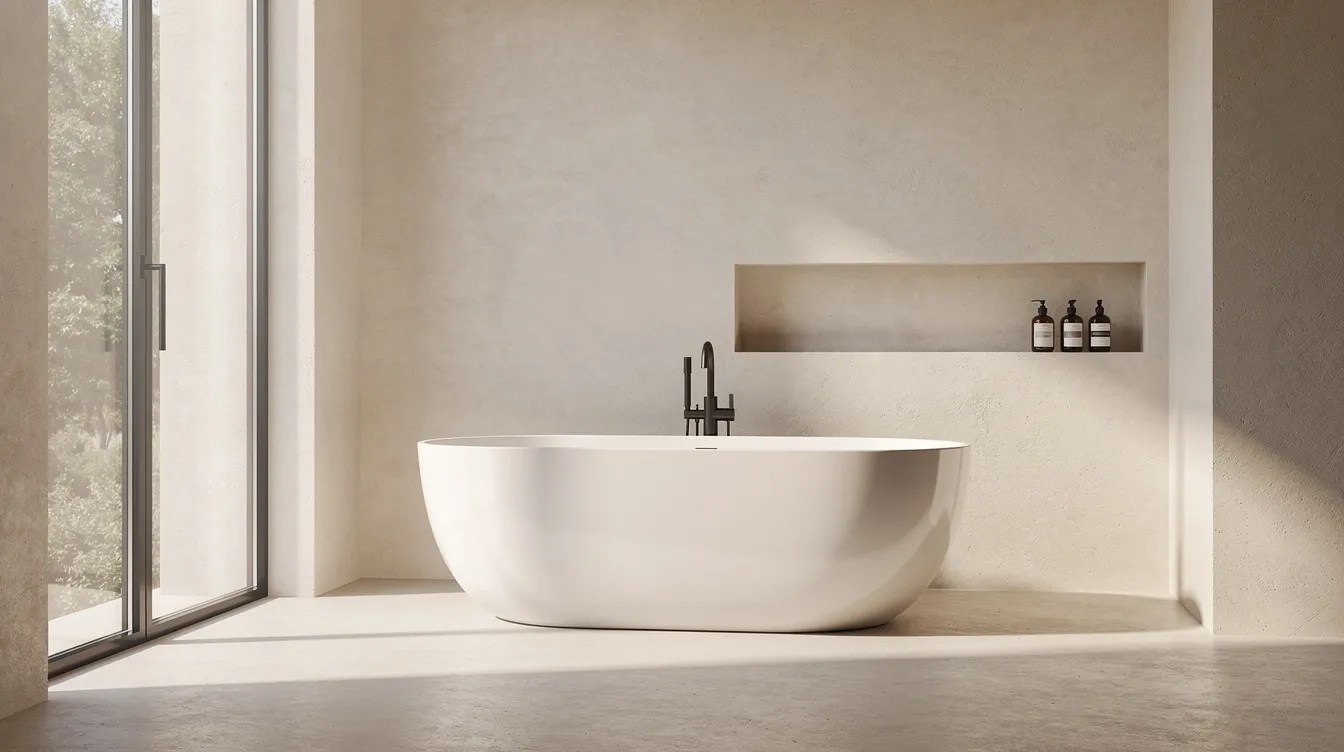
Why Lime-Based Venetian Plaster Works So Well in Bathrooms
Bathrooms cycle through extremes experiencing hot steam, condensation and direct splashes multiple times a day. Standard acrylic paints and cement-based coatings trap moisture behind their film, leading to blistering, mildew, and premature failure. Lime-based plasters have fundamentally different behavior.
Lime plaster is breathable: it allows moisture vapor to pass through the finish rather than trapping it against the substrate. Walls dry from the inside out, which is critical in humid environments where condensation is constant. This porous nature is why venetian plaster allows moisture vapor to pass through even when applied across an entire wall surface.
Lime plaster is also naturally mold-resistant due to its high alkalinity. During the curing process, the surface maintains a pH near 12 which creates an environment where mold and mildew simply cannot establish. This natural resistance eliminates the need for chemical biocides that degrade walls over time.
Durability is where the material truly distinguishes itself from paint. Through carbonation, lime plaster slowly absorbs CO₂ and reverts to calcium carbonate-essentially becoming stone. With proper substrate preparation and sealing, venetian plaster can last up to 15 years with proper care, far outlasting the 3–5 year cycle of standard latex paint.
Not all products marketed as "venetian plaster" deliver these benefits. Many acrylic or polymer-modified imitations sacrifice breathability entirely. Vasari focuses on mineral, low-VOC, lime based formulations that perform well in high moisture areas.
Best Places to Use Venetian Plaster in a Bathroom
Not every surface in a bathroom gets the same water exposure, and your material choice should follow actual splash and steam patterns rather than treating the entire room as a wet zone.
Dry and low-splash zones are where standard venetian plaster excels:
-
Main wall areas away from the shower
-
Vanity walls and mirror borders
-
Ceilings (flat or vaulted)
-
Niches outside of direct spray
-
Tub surrounds used with a hand shower only
-
Powder room walls and ceilings
In wet areas with copious direct water contact like the insides of showers, directly around fixed shower heads, and behind open walk-in entries, choose a lime based waterproof system like tadelakt or a specialized sealed Marmorino. For shower applications smooth plasters are recommended. They help prevent mold growth in showers by eliminating crevices where moisture collects.
Floors and constantly submerged areas are generally not suited for polished venetian plaster. Tile, stone, or microcement are better options for those surfaces.
The Vasari team is happy to help you specify appropriate wall finishes by reviewing simple room sketches or photos-mapping exactly which zones call for which plaster system.
Design Ideas: 10 Ways to Use Venetian Plaster in Your Bathroom
Think of these as starting points. Each idea can be adapted to your space, light conditions, and lifestyle. Texture and color customization are available across all venetian plaster finishes, so the range of possibilities is virtually unlimited.
-
Full-height walls and ceiling in a primary suite. Wrap the room in soft lime plaster colors like warm white or pale greige in a velvety matte sheen to create a spa like sanctuary that feels enveloping rather than clinical.
-
Dramatic accent wall behind the vanity. Use a deeper toned Marmorino with subtle movement and striations paired with simpler tile in the shower to keep the focal point on the plaster.
-
Bathtub alcove. Frame a freestanding tub with polished venetian plaster, applying waterproof finishes only where the tub deck meets the floor.
-
Plastered ceilings. A slightly burnished, low-sheen finish in light colors bounces light beautifully and adds quiet luxury to ceilings without creating glare.
-
Chair-rail strategy. Install tile or stone up to approximately 42 inches high, then venetian plaster above that point to the ceiling. A slim trim breaks the two plaster finishes cleanly while protecting the lower splash zone.
-
Plastered niches and shelving. Smooth venetian plaster with rounded edges showcases the material's organic quality in niches outside shower spray areas. A seamless finish without grout lines is one of the key advantages here.
-
Curved walls and radius entries. Plaster hugs non-linear forms without joints. A curved shower entry in Marmorino feels spa-like and sculptural.
-
Mixed finishes. Apply matte lime plaster on most walls, with a higher-polish burnishing venetian plaster on a single feature wall. Architectural breaks like returns or trim can delineate the transition nicely.
-
Color-blocking. Use lime-based darker colors on the lower third with a lighter tint above for continuity of texture and breathability.
-
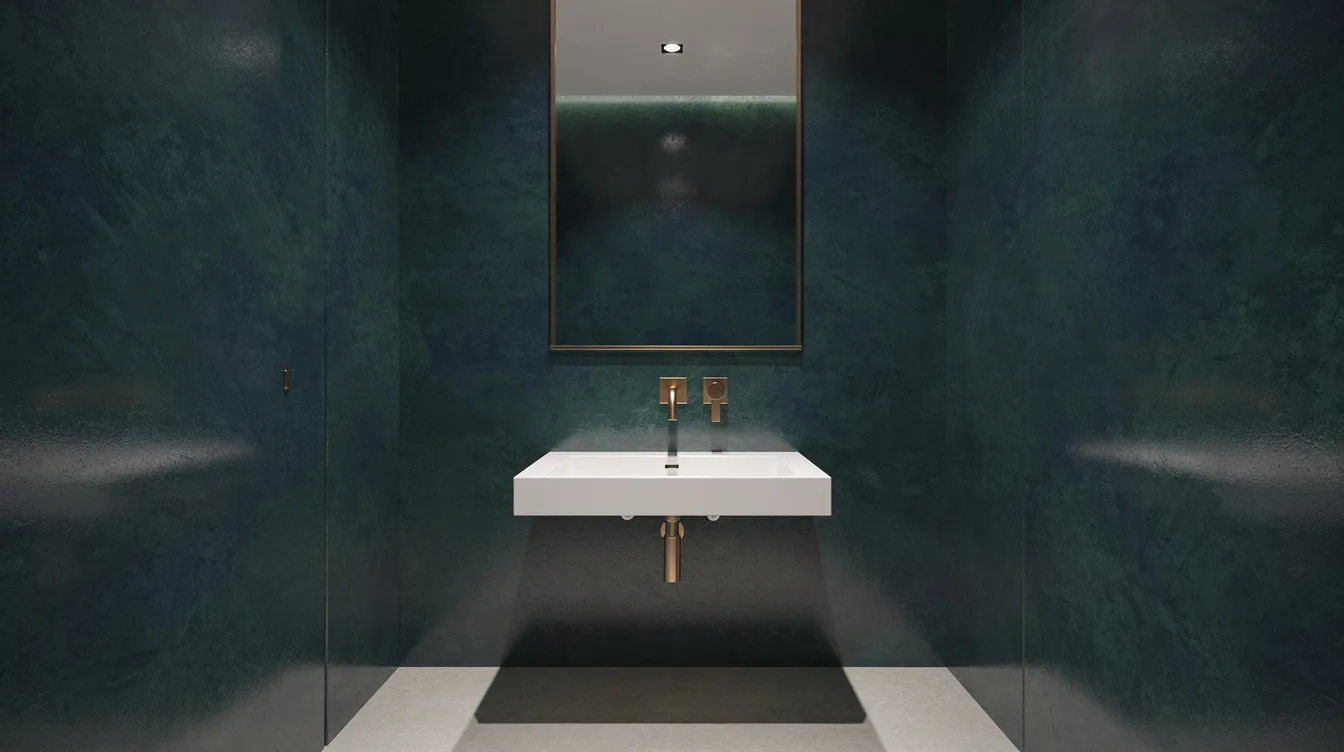
Powder room jewel box. To create drama in a small footprint apply bold saturated color with a high gloss finish and linear lighting. Texture variation in venetian plaster helps achieve unique aesthetic effects even in compact spaces.
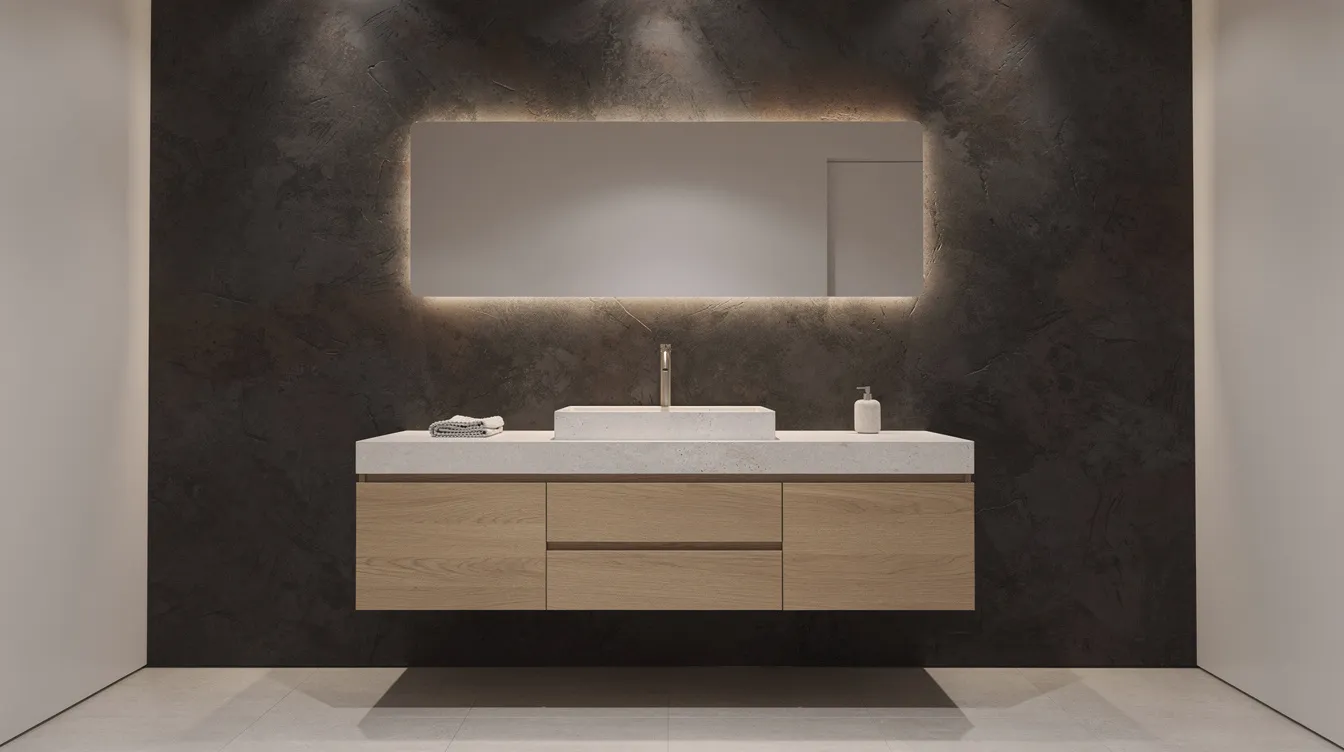
Powder Room Perfection: High-Impact Plaster in Low-Moisture Spaces
A powder room sees almost no steam and only occasional hand-washing splashes making it the ideal space for bolder, more adventurous plaster finishes.
This is where you can lean into saturated polished venetian plaster in colors like deep teal, charcoal, or ink blue. Metallic tints with a high gloss finish that would demand constant upkeep in a full shower room become entirely practical in dry areas like a half bath. Veneziano features a high gloss finish that reflects light beautifully in these intimate spaces and reads as polished stone under directed lighting.
Pair your plaster with simple fixtures: wall-hung basins, frameless mirrors, and linear LED light strips allow the wall finishes to remain the undisputed star. Because moisture exposure is minimal, designers can explore delicate textures and sheens that might be impractical near a shower.
Vasari can color-match to historic palettes or specific fabric and stone samples, creating fully bespoke powder room schemes that feel intentional down to the last detail.
Showers & Wet Areas: Venetian Plaster, Tadelakt, and Other Options
The critical distinction is between water resistant and fully waterproof. For a water resistant finish choose venetian plaster with sealer and wax in zones with occasional splashes in the general humidity of a bathroom. However shower walls receiving direct daily water exposure from a fixed head need a system that is fully waterproof.
Standard lime based venetian plaster is naturally moisture resistant and ideal for humid environments: the bathroom ceiling, walls flanking the shower, the area above a tub. But for the interior of a shower stall, you need a tadelakt product or a specific Marmorino carefully sealed. Proper sealing is essential for plaster in wet areas regardless of which system you choose.
Tadelakt is a traditional Moroccan plaster technique ideal for direct water exposure. Traditionally, it's applied in thin layers, burnished with a stone, then treated with olive soap to create calcium stearate on the surface which produces a dense, water-repellent barrier suitable for shower walls and niches. Vasari Lime Plaster & Paint uses a combination of their products in their Vasari Shower System inspired by this Moroccan technique. Creating a shadow gap where plaster meets the shower floor prevents moisture accumulation. This shadow gap detail is just as important as the plaster itself.
Sensible material mapping for a full bathroom looks like this:
|
Zone |
Recommended System |
|---|---|
|
Inside shower stall / shower walls |
Tadelakt or Vasari Shower System |
|
Adjacent walls and ceiling |
Venetian plaster or sealed Marmorino |
|
Floors |
Tile or stone or engineered wood |
Finish Types: From Soft Lime Plaster to High-Gloss Venetian Polished Plaster
"Venetian plaster" is used generically by various brands, but it also covers multiple finish families with distinctly different looks and maintenance profiles.
Marmorino. Lime plaster with fine marble dust aggregate. Marmorino provides a natural limestone look that is suited for bathrooms and creates a soft, stone-like texture that reads like honed marble. It handles slight surface irregularities better than high-gloss systems, making it more forgiving for less-than-perfect substrates.
High-gloss polished venetian plaster. Multiple light coats applied smoothly and burnished to a polished marble-like finish. This dramatic option reflects light and adds depth to accent walls and powder rooms. Polished plaster at this level amplifies every detail, so substrate preparation must be meticulous.
Specialty textures. Travertine mimics natural stone with a textured, multi-tonal effect. Coarse Marmorino with trowel marks can simulate limestone blocks or concrete while remaining lime based and breathable.
When choosing sheen, consider your light conditions: lower sheen in bright, sunlit bathrooms to avoid glare; higher sheen behind vanities or in low-light powder rooms for added glamour. Vasari offers wet and dry mixes across each category and can help spec layer counts depending on your desired plaster finishes.
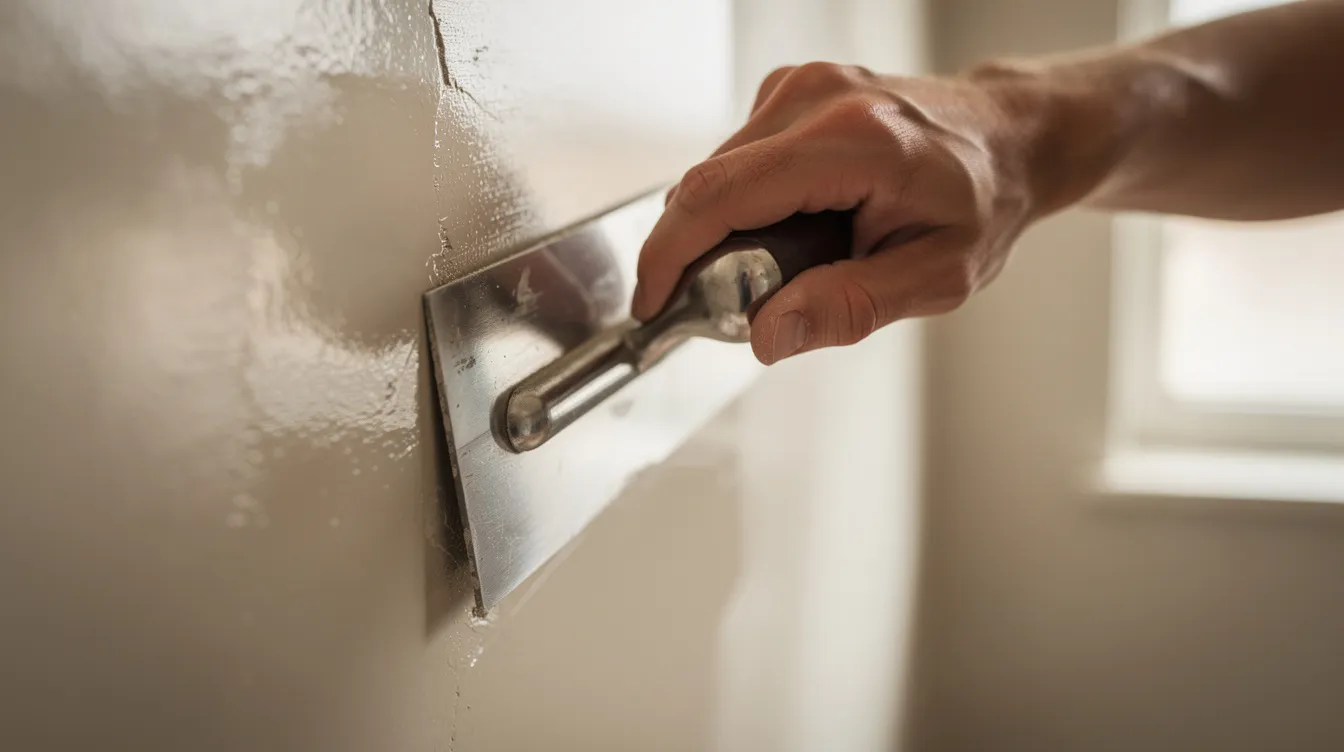
Water Resistance, Sealing & Protecting Against Water Damage
Authentic lime plaster is water resistant on its own because it's alkalinity and breathability give it natural defenses. But in bathrooms, where the surface encounters splashes, soaps, cosmetics, and daily steam, proper sealing to withstand humid bathroom environments is required.
The Vasari Shower System is engineered to be protective by applying distinct layers to seal the plaster:
-
Vasari Mineral Sealer - Our natural mineral sealer penetrates into the small pores of the burnished plaster creating a water resistant barrier.
-
Vasai Wax - Our natural wax creates a water repellant surface and gives the final sheen to the walls.
Proper sealing with Vasari Mineral Sealer and Vasari Wax enhances venetian plaster's moisture resistance while preserving the breathability that makes lime plaster the premiere choice for bathrooms. Sealers must be compatible with lime based products. Generic acrylic sealers block vapor transmission entirely, trapping moisture behind the finish and creating the exact conditions for mold that lime plaster is designed to prevent.
Protection levels should match the zone:
-
Upper walls and ceilings: Only light sealer and wax are necessary.
-
Behind sinks and near tubs: More robust sealing with additional wax coats is required.
-
Shower spray zones: Full waterproofing system (tadelakt or dedicated shower plaster)are essential.
Common mistakes include skipping corner and edge detailing, failing to seal around plumbing cutouts, and neglecting ongoing maintenance. Regular maintenance helps to preserve the finish and water resistance of venetian plaster. Plan to re-wax or re-seal splash zones every 3–5 years. Vasari provides product-specific care recommendations for each system.
Practical Considerations: Substrates, Application & Maintenance
Good preparation under the plaster is critical in bathrooms. Even small substrate weaknesses telegraph through a polished finish. Moisture behind a poorly prepped wall can cause adhesion failure within months. Proper and meticulous wall preparation is essential before applying venetian plaster.
Suitable substrates by zone:
|
Zone |
Substrate |
|---|---|
|
Shower interior |
Cement board or equivalent shower backer board |
|
Dry bathroom walls |
Properly primed gypsum board |
|
Renovation over existing surfaces |
Sound plaster or tile with approved bonding primer |
The basic application sequence is as follows: level the surface, apply an elastomeric primer when necessary (used for waterproofing cement boards), then build the Vasari Shower System in multiple thin layers and seal the appropriate areas. A typical venetian plaster system involves a first coat for coverage, a second coat for refining texture and color, and often a third coat for final burnishing and polish. Each layer must be allowed to fully dry before the next layer is applied directly on top, typically 24 hours.
Venetian plaster requires multiple thin layers for depth. This is not a material you can rush. For full bathrooms and shower walls, work with experienced plaster applicators. Advanced DIYers can tackle smaller powder rooms or accent walls after practicing on sample boards. Wall preparation alone can take several days if excessive texture requires multiple layers of drywall mud to dry before primer can be applied.
Daily care is straightforward:
-
Wipe splashes with a soft cloth
-
Avoid harsh chemical cleaners and abrasive pads
-
Place towels or mats where frequent drips occur
Small scratches or chips can often be blended and refinished locally, but color-matched touch-ups are much easier when you keep original batch codes or Vasari color formulas on file. With this level of detail, venetian plaster can last up to 15 years with proper care. The durable, stone-like surface only improves with age.
Color & Lighting: Getting the Most from Venetian Plaster in Bathrooms
Venetian plaster interacts with light differently than flat paint. Its layered depth refracts and scatters light within the finish, creating the appearance of natural stone rather than a painted surface. In compact bathrooms with mirrors and glass, this effect multiplies.
For small bathrooms, stick with light colors like soft white, warm gray, pale sand to maximize reflected light and create a calm, spa-like feel. A matte or satin finish keeps these spaces feeling open without the harshness of glare.
For larger baths and powder rooms, deeper tones work beautifully. Ink blue, olive, and charcoal paired with strong task lighting at the mirror creates a room with genuine presence. Darker colors gain depth from the plaster's translucent layers in a way that paint simply cannot replicate.
Sheen directly affects perceived color. A high-gloss finish deepens and saturates color while revealing more contrast and texture. Matte finishes read softer and more uniform, smoothing out tonal variation.
Before committing to a finish or color, create large sample boards and view them under your actual bathroom lighting-vanity fixtures at night, natural sunlight during the day. Vasari's tinting team can help you dial in exact tones.
Because lime plasters age gracefully, the slight patina that occurs over time adds character rather than looking like water damage, provided the finish is properly sealed and maintained. This timeless elegance is one of the reasons venetian plaster has endured for centuries, from Renaissance Venice to contemporary luxury homes.
Working with Vasari Lime Plaster & Paint for Your Bathroom Project
Vasari is more than a material supplier-it's a technical partner for architects, designers, builders, and homeowners planning venetian plaster bathrooms.
You can request product samples in specific color families: Marmorino, polished venetian plaster and tadelakt-style finishes. All products are available for real-world testing in your own space. Seeing the material under your bathroom's actual lighting is the single best way to make a confident decision.
Vasari offers hands-on project support: reviewing your drawings, advising which lime based or waterproof systems belong on shower walls versus dry areas, and recommending trained applicators in select regions. Whether you need to protect existing surfaces with a renovation overlay or are creating an interior from scratch, the team can map the right product to every wall, surface, and ceiling.
Shipping is available across the U.S., Canada, and internationally, with both wet and dry mixes sized for projects large and small. For answers to common questions, visit the Vasari FAQ.
Ready to get started? Contact Vasari for specification help, sample kits, or to discuss converting your existing tiled bathroom into natural plaster finishes that deliver beauty, durability, and elegance for years to come. You can reach the Vasari human team at 805-667-8454.

