

Marmorino Plaster: Complete Guide to Natural Lime & Venetian Finishes

Introduction to Marmorino Plaster
Marmorino plaster is a traditional Italian wall finish prized for its organic texture and natural composition. Made from slaked lime putty and crushed marble, it has been used for centuries to create surfaces that look and feel like natural stone. Today it remains one of the most sought-after decorative plasters for interior walls and ceilings worldwide.
At Vasari Lime Plaster & Paint, we manufacture natural marmorino plasters and venetian plaster for professionals, architects, designers, and homeowners. Our products are made from mineral ingredients, shipped globally, and supported by technical guidance for every project type. Typical uses range from feature walls in luxury homes and spas to full-room treatments in boutique hotels and commercial spaces. Marmorino is popular in wabi-sabi, minimalist, and modern Mediterranean interiors, and it complements both traditional and modern architectural styles with equal ease.
A quick note on terminology: "marmorino plaster" refers to the family of lime-and-marble plasters that produce stone-like textures. "Marmorino fine" is an extra-fine-grain version with a smoother, more satin finish. "Venetian plaster" is a broader term that encompasses marmorino and other burnished lime plasters, while "lime plaster" is the general category of plasters using slaked lime as a binder. These terms overlap, but each describes a distinct grain, sheen, and application technique.
What Is Marmorino Plaster Made Of?
Authentic marmorino is a mineral, lime-based plaster - not an acrylic paint or synthetic paste. Unlike synthetic coatings that rely on plastic resins, genuine marmorino is manufactured from natural, mineral ingredients that harden chemically into stone over time.
Core ingredients and properties:
-
Slaked lime putty (calcium hydroxide): Aged lime putty serves as the binder. Over weeks and months, it reacts with atmospheric CO₂ and carbonates back into calcium carbonate - essentially turning back to stone. The production of calcium oxide during initial lime burning is the first step in this ancient process.
-
Marble dust and powdered marble: Finely crushed marble provides visual depth, light refraction, and the characteristic stone-like body. Marmorino contains natural limestone, powdered marble, and fine sand as its mineral aggregates.
-
Fine limestone or marble sand: Coarser particles are added in medium and coarse formulations to increase texture and coverage.
-
Mineral pigments: Natural colorants are used to tint the plaster. Colors can be tinted to match any designer palette or historical reference.
-
Trace natural additives: Small amounts of natural binders may be included for workability on modern substrates.
Marmorino plaster is zero-VOC and non-toxic. Its natural ingredients contribute to a healthy indoor environment, and because lime is vapor-permeable, the finished surface breathes - a critical difference from acrylic "polished plaster" imitations that trap moisture behind a plastic film. Marmorino is highly valued for its natural composition and versatile finish.
Types of Marmorino Plasters (Including Marmorino Fine)
"Marmorino" is not a single product but a family of plasters with different grain sizes and finishes, all lime- and marble-based. The texture, sheen, and visual effect depend on aggregate size and application technique. Marmorino finishes can range from matte to glossy. Here is how Vasari categorizes its marmorino lines:
-
Marmorino fine: Extra-fine marble grain produces a satin to soft gloss surface. Ideal for smooth, refined walls and ceilings in contemporary interiors where a subtle sheen and elegant depth are desired.
-
Medium marmorino: Slightly larger aggregate creates soft texture with light movement and subtle stone-like variation. A versatile middle ground suitable for most residential and commercial projects.
-
Coarse or "intonaco" style marmorino: Pronounced grain delivers rustic, old-world stone effects with visible aggregate and pronounced texture. Best for Mediterranean, coastal, or historic restoration schemes.
-
Stone / rustic marmorino: Leaves aggregate slightly open for a more tactile, irregular surface - ideal for feature panels or accent walls where raw material character is desired.
-
Venetian plaster fits at the finer, more mirror-like end of this spectrum. It uses the finest marble dust, receives the most burnishing, and produces the highest gloss - a distinct category within the lime plaster family.

History and Origins of Marmorino & Venetian Plaster
Marmorino's roots stretch back to ancient Rome. Roman builders used lime plasters mixed with marble dust on the walls of villas, baths, and public buildings - techniques documented by Vitruvius in De Architectura during the 1st century B.C. Archaeological evidence from Pompeii confirms that layered lime-marble finishes were standard practice in high-status Roman interiors.
The material experienced a dramatic revival in Venice during the Renaissance, from the 14th through 16th centuries. Venetian builders applied marmorino to the facades and interiors of palazzos and churches, imitating the appearance of carved Istrian stone and polished marble without the weight or cost. The lagoon city's damp climate made lime plaster's breathability essential - artisans often combined it with coccio pesto (crushed terracotta) for added moisture resistance.
After declining in the 19th and early 20th centuries, traditional lime techniques were rediscovered in Italy during the 1970s and 1980s. Architects drew renewed attention to the history of lime plaster and its relevance for contemporary buildings. By the 2000s, demand from designers in the US, UK, and Australia had turned marmorino into a global material. Vasari's products are based on these historical lime formulas, adapted for modern substrates like drywall and cement board - making centuries-old craftsmanship accessible to date for any project.
Appearance & Finish Options
Marmorino's visual range is broad. Depending on grain size, polishing techniques, and pigmentation, the same material can produce everything from a quiet matte wall to a luminous, semi-glossy surface. It achieves a natural, honed-stone aesthetic with subtle depth that flat paint simply cannot replicate.
-
Matte / natural stone finish: Unburnished or lightly compressed. Low sheen, light movement, soft visual warmth. Ideal for rustic, Mediterranean, or minimalist interiors - think a coastal kitchen in natural white or a rural hallway in warm cream.
-
Satin finish (typical for marmorino fine): Applied smooth and lightly burnished, creating a soft reflection with refined elegance. Great for living rooms, bedrooms, and corridors where modest shine complements natural light without overwhelming the space.
-
Polished / burnished finish: Higher sheen approaching the look of venetian plaster finishes, but retaining gentle stone movement. Suitable for feature walls, fireplace surrounds, and hospitality lobbies where drama and light reflection are desired.
-
Color options: From natural whites and warm beiges to soft greys, charcoal, terracotta, and sage. Vasari can custom-tint marmorino plasters to match designer palettes, historical references, or specific color codes - including benjamin moore references when coordination with adjacent painted surfaces is needed.
Marmorino serves as a beautiful alternative to marble or ceramic tiles, delivering the look of polished marble or natural stone at a fraction of the weight and cost.

Benefits of Lime-Based Marmorino Plaster
Marmorino is chosen for aesthetics, performance, and health. Its three main benefits - breathability, durability, and versatility - make it a material that performs as well as it looks. Marmorino plaster creates aesthetically sophisticated and durable decorative walls that age gracefully over decades.
-
Breathability and moisture regulation: Lime plaster lets walls breathe. Marmorino allows moisture to escape, preventing mold growth and reducing condensation risk - especially valuable in bathrooms, kitchens, and humid climates. It is resistant to mold and mildew due to this inherent breathability.
-
Durability: Through carbonation, marmorino hardens over months into a stone-like, durable surface. Well-applied finishes can last 15–30+ years, far outlasting paint. The advantages of lime plaster in modern architecture are well documented.
-
Health and eco benefits: Zero-VOC and non-toxic, with mineral pigments and no plastic resins. Suitable for chemically sensitive clients and projects pursuing LEED certification or similar green building goals.
-
Fire and UV resistance: Lime is non-combustible. Mineral colors hold up well to light exposure on interior walls, resisting the fading common with organic pigments.
-
Design flexibility: Marmorino can be layered, toned, tinted, and textured for subtle or dramatic effects, complementing both classic and modern architecture with equal confidence.
How Marmorino Differs from Venetian Plaster and Other Lime Plasters
Marmorino, venetian plaster, and general lime plaster all share a lime base, but they differ significantly in grain, sheen, technique, and cost. Understanding these differences helps you choose the right system for your project.
-
Marmorino vs venetian plaster: Marmorino is thicker than venetian plaster during application and uses coarser aggregate, producing a stone-like or cloudy appearance with depth and texture. Venetian plaster can be polished to a high gloss finish - a mirror-like, highly refined polished surface. Marmorino typically requires two to three coats for application, while venetian plaster may require three to seven layers for a finish. Explore the Veneziano plaster collection for comparison.
-
Marmorino vs standard lime plaster: Marmorino uses marble flour and selected mineral aggregates for decorative finishes. Basic lime plaster is more structural or serves as a base coat - it lacks the marble content that gives marmorino its visual complexity.
-
Where they overlap: Marmorino fine, when heavily burnished, can visually overlap with venetian plaster. But application thickness, texture, and the number of layers still differ. Venetian demands more coats and more precise burnishing.
-
Practical impact: Venetian plaster generally costs more in labor due to additional layers and burnishing time. Marmorino is somewhat more forgiving - its texture hides minor substrate imperfections, reducing prep cost. Glossy finishes magnify flaws; matte and satin marmorino do not.
Where to Use Marmorino Plaster (Rooms & Projects)
Marmorino is suitable for residential and commercial interiors - on walls and ceilings wherever a natural, stone-like surface adds value. It works in virtually any space where you want material warmth without the weight of actual stone.
-
Living rooms and entrances: Feature walls, fireplace surrounds (non-combustible), and double-height foyers. Marmorino's depth and color variation create dramatic presence under natural light.
-
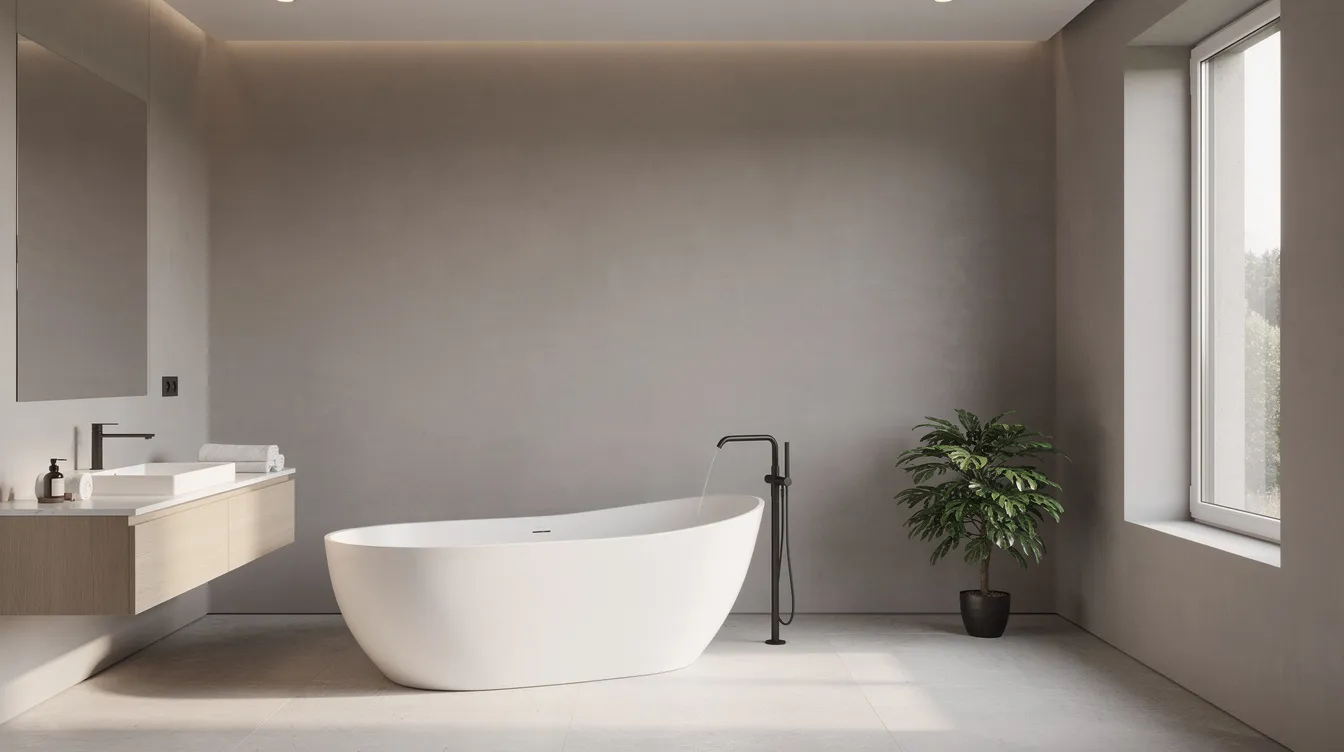
Bathrooms and powder rooms: Lime's resistance to mildew makes it ideal. When sealed properly, marmorino can be used in wet areas such as bathrooms. Applying a mineral sealer enhances marmorino's water repellency - see our mineral sealer instructions for guidance.
-
Kitchens and dining spaces: Backsplashes outside direct water contact, hood walls, and open-plan living/dining areas where unified texture ties the space together.
-
Hospitality and retail: Boutique hotels, spas, restaurants, and galleries worldwide. Vasari supplies designers and architects on commercial projects from New York lofts and coastal homes in California to London townhouses and beyond.
Basic Application Process (From Substrate to Finish)
Results depend heavily on surface preparation and skilled trowel work. For best results, trained DIYers or professional artisans should follow our complete system. Vasari provides detailed marmorino instructions and technical data sheets for every product.
-
Substrate preparation: Surfaces must be smooth, clean, and dry before application. Level 4–5 drywall, cured lime or cement plaster, or sound masonry all work. Remove dust, fill joints, and sand any imperfections.
-
Primer: A high-quality primer ensures proper adhesion for marmorino application. Apply one coat of Quartz Primer and let it set for 3–5 hours. Use a mineral-based primer to equalize suction and improve bonding.
-
First coat (base coat): Apply a thin, even base coat of marmorino with a stainless steel trowel. This body coat builds coverage and levels the substrate. Allow each layer to dry properly before applying the next.
-
Second coat (and optional third coat): Apply tighter, thinner passes, compressing and crossing trowel strokes to create movement and depth. Marmorino is applied in two to three coats for the desired finish. Proper curing typically takes 24–48 hours between coats.
-
Burnishing and protection: Once the final coat has firmed up, burnish with the flat of your trowel for the desired sheen. Seal with natural wax, soap finish, or mineral sealer where higher water resistance is needed. The right tools and techniques make all the difference.
Choosing Colors, Textures, and Sheen Levels
Color choice should consider the room's light, size, and overall design style. Marmorino's mineral pigments shift subtly between wet and cured states, so always test samples in situ.
-
Neutrals (whites, beiges, greys): Ideal for timeless beauty in calm, open spaces. Slight tone shifts and natural variation keep walls from looking flat - a natural white marmorino in a bedroom feels alive in ways paint cannot match.
-
Deeper tones (charcoal, terracotta, earthy greens): Used as statement walls or in intimate spaces like dining rooms, bars, or hotel suites. These create drama and warmth.
-
Texture choice: Choose smooth marmorino fine for modern interiors and slightly more textured finishes for Mediterranean or rustic schemes. Mixing textures in adjacent rooms adds visual interest.
-
Sheen: Matte for understated elegance, satin for most living spaces, and higher glossy finishes only where reflection and drama are desired. Areas with strong natural light showcase a refined finish best.
Vasari can custom-tint to match exact color codes, ensuring your marmorino integrates seamlessly with the broader design palette.
Care, Maintenance, and Longevity
Marmorino is low-maintenance but not maintenance-free. Properly applied and sealed, it usually outlasts paint by a factor of three or more - meaning fewer refreshes, less waste, and lower long-term cost.
-
Routine cleaning: Soft, dry dusting or a slightly damp cloth for fingerprints. Avoid harsh chemicals, bleach, and abrasive pads. This will maintain the surface without damaging the mineral finish.
-
Minor repairs: Small scuffs or chips can often be blended by a trained applicator with touch-up marmorino and careful trowel work. Textured finishes are more forgiving than polished ones.
-
Sealing intervals: If a wax or soap finish is used, re-application every few years refreshes protection and sheen. Bathrooms and commercial spaces may need more frequent renewal.
-
Patina: Marmorino develops a soft, evolving patina over time - a subtle mellowing of color and surface that is considered a desirable part of its character, not a defect. Like natural stone, it ages with timeless beauty.
Why Specify Vasari Lime Plaster & Paint for Marmorino Projects
Vasari Lime Plaster & Paint is a specialist manufacturer of lime plaster, marmorino, venetian plaster, and lime paint. We supply both trade professionals and homeowners with materials, training, and project support.
-
Product quality: High-calcium slaked lime, marble aggregates, and mineral pigments in every batch. Consistently controlled formulas and batch testing ensure reliable results across projects.
-
System approach: Primers, base coats, marmorino plasters, topcoats, and waxes designed to work together - supported by technical data sheets, application guides, and hands-on classes.
-
Support: Design and spec assistance for architects and designers, color consultations, and project referrals to trained applicators across multiple regions.
-
Sustainability: Zero-VOC, natural ingredients, and suitability for LEED and other green building certifications. The material is as responsible as it is beautiful.
Whether you are planning a single feature wall or specifying finishes for an entire commercial project, we are here to help. Contact Vasari for samples, technical advice, or to discuss your upcoming marmorino or venetian plaster project.


